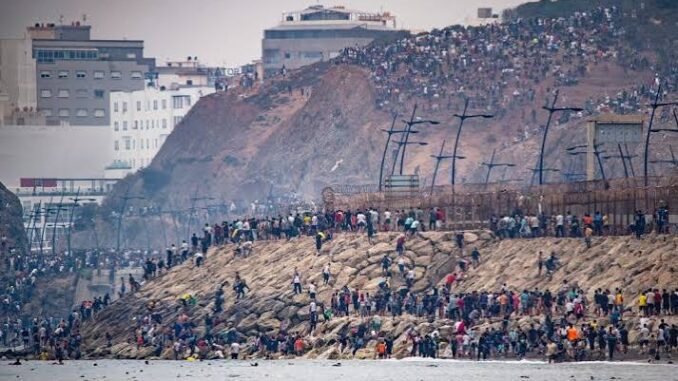
A large migration surge at the border between Morocco and the Spanish territory of Ceuta has drawn attention across Europe. The incident has raised concerns about border security, migration policies and humanitarian challenges. As European governments respond to the situation, many people are asking what caused the crisis, why Spain faces legal difficulties and what the wider impact could be on the European Union.
What happened at the Ceuta border?
Ceuta, a Spanish territory located on the northern coast of Africa, witnessed a major influx of migrants over a short period.
- 50,000 to 60,000 migrants: Authorities estimate that this number of people attempted to cross into Ceuta within about 36 hours.
- 84,000 residents: Ceuta’s population is around 84,000, meaning the number of arrivals was equal to a large share of the territory’s population.
- More than 57 deaths: Most fatalities were reported due to drowning as large crowds tried to cross by land and sea.
- Current situation: Spanish officials say many of those who entered Ceuta had returned to Morocco by Friday evening.
Why is Spain facing legal challenges?
Spain has promised to manage the situation, but legal restrictions limit the government’s options.
- Supreme Court ruling: A recent ruling by Spain’s Supreme Court prevents authorities from automatically returning migrants who arrive by sea directly to Morocco.
- Political pressure: Prime Minister Pedro Sánchez has called for a united European response while defending existing European Union agreements. Critics argue that current rules make it difficult to respond quickly during large-scale border crossings.
How Europe is responding
The developments in Ceuta have prompted action from several European countries.
- Italy: Italian authorities temporarily suspended aspects of open-border travel arrangements with Spain for one month, citing security concerns.
- France: French Interior Minister Laurent Nuñez ordered additional police and security personnel along the French-Spanish border. Authorities also increased aerial surveillance using drones and aircraft.
- European Union: European Commission President Ursula von der Leyen stressed that European Union entry rules must be respected by all member states.
International reaction to the crisis
The situation has also attracted attention outside Europe.
- United States: The U.S. State Department criticised Spain’s migration policies. Former U.S. President Donald Trump also commented on the issue on social media, linking it to debates over border security in the United States.
Why Ceuta is important
Ceuta plays a unique role in migration and border security because of its location and political status.
- A European border in Africa: Ceuta and Melilla are the only land borders between the European Union and the African continent.
- Spain-Morocco cooperation: Border management depends heavily on cooperation between Spain and Morocco. Changes in border enforcement have often been linked to wider diplomatic issues between the two countries.
- Access to Europe: Because Ceuta is Spanish territory, people who enter the area reach European Union soil. This activates asylum procedures and other legal protections under European law.
- Pressure on local services: Large and sudden arrivals can quickly strain housing, healthcare and emergency services in a small territory like Ceuta.
Why the crisis matters
The events at the Ceuta border highlight the challenges Europe faces in balancing border security, humanitarian responsibilities and migration management. The situation has also renewed debate over asylum laws, border controls and cooperation between European countries and neighbouring nations.
As investigations and policy discussions continue, Ceuta remains a key focus for governments trying to address migration pressures while maintaining security and humanitarian commitments.
Bureau Report
Leave a Reply